
“Joseph sought out team member stories and wove them seamlessly into his presentation. Our associates were recognized by leaders across the organization. Truly built around our people.”
Drawn from work alongside Zappos, Pike Place Fish Market, UCLA Health, and Starbucks — and the conviction that every engagement is personal.
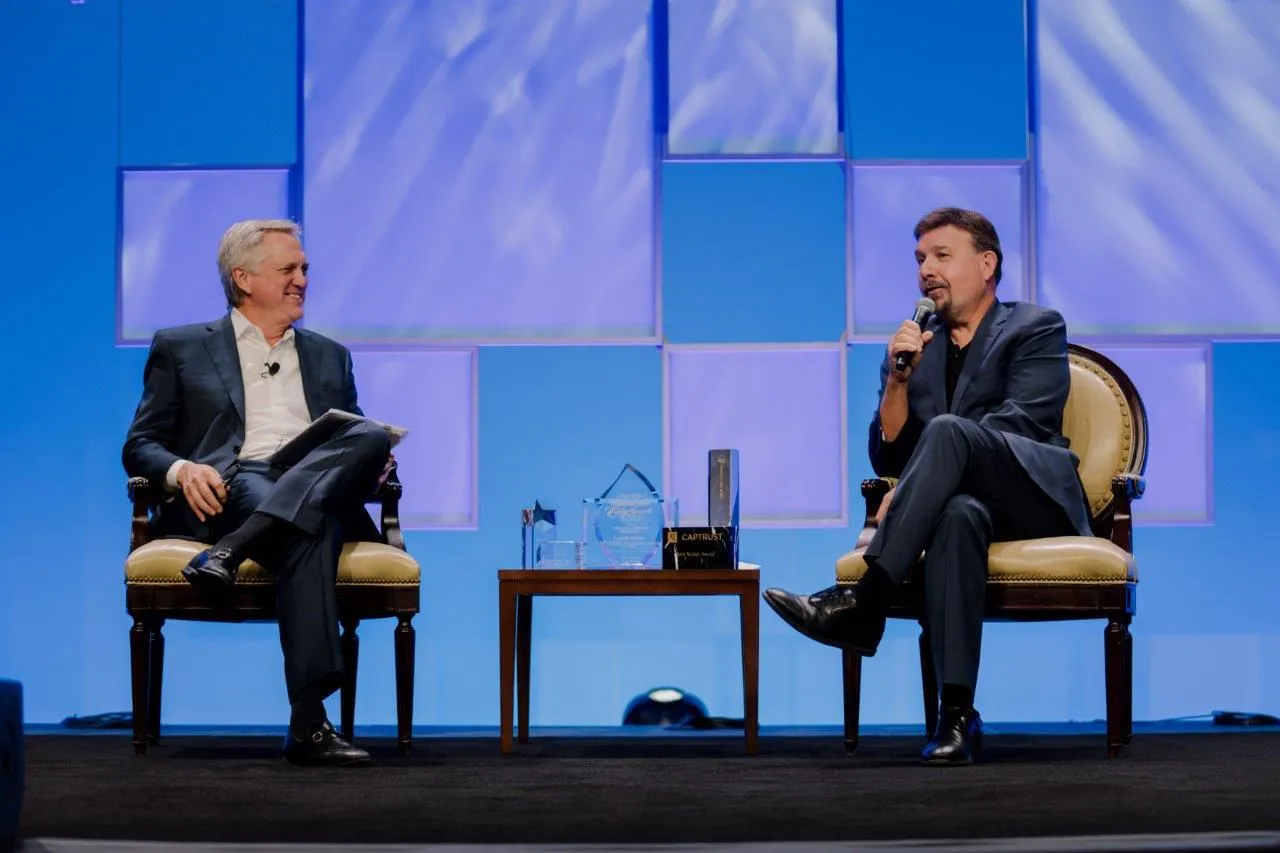
In conversation with leaders · Where culture gets built
The brands with the deepest cultures select humans first, capabilities second. Skills can be taught. Cultural alignment cannot.
If your frontline can't resolve a customer's problem without escalation, you don't have engagement — you have an org chart.
Culture shows up in how people start meetings, how shifts begin and end, how a colleague's birthday gets noticed. Slogans are decoration; rituals are the real thing.
Compensation signals what you value. The brands with the strongest cultures pay frontline talent like the strategic asset they are.
The brands with engaged frontlines do both consistently. The brands with disengaged ones do neither — or worse, invert them.
Five patterns Joseph has seen alongside the brands with the lowest turnover and the highest customer loyalty.
Most attrition is decided in the first three months. Audit the onboarding experience as if you were a new hire.
Policies signal what gets rewarded. If your handbook rewards rule-following over judgment, your frontline will stop using their judgment.
Not a quarterly program. A weekly habit at every level of leadership — specific, public, and tied to behaviors you want to see more of.
If a frontline employee can't resolve a $100 problem without manager approval, the brand has decided that hierarchy matters more than customer experience.
Concrete interventions anyone can make the week after the presentation.
“Joseph sought out team member stories and wove them seamlessly into his presentation. Our associates were recognized by leaders across the organization. Truly built around our people.”

“Joseph understands people, teams, and culture at a level few speakers do. His work has shaped how we lead and how we care for those we serve.”

“Joseph has spoken for us multiple times and always delivers. Our operators leave energized and equipped.”
“The brands that earn the most customer loyalty are almost always the same brands that earn the most employee loyalty. That's not coincidence. That's architecture.”
Joseph Michelli
The Starbucks Experience
What Joseph is writing about right now
Before you run another engagement survey, look at what your people actually do all day.
Verint surveyed 1,000 contact center agents for its State of Agent Experience 2026 and found that 45 percent of calls require an agent to search for an answer mid-conversation. Fifty-four percent require after-call work like summarizing and documenting. Sixty-seven percent require the agent to complete a task on the customer's behalf. Fifty-seven percent require gathering context because the issue arrived without any.
Verint's own summary names the cost precisely. Those tasks pull agents away from “the moments that matter most: listening, empathizing, and resolving customer issues.”
That is the finding worth sitting with. Your people may not be disengaged. They may be buried — and buried under exactly the work a machine could take. Disengagement is often a symptom of a job that has been quietly filled with things no human should be doing.
Five patterns dig them out.
IKEA made that investment in public. When the company leaned into a customer-service assistant it named Billie, the tool was resolving roughly 47 percent of the inquiries it received — some 3.2 million conversations and close to €13 million in savings between 2021 and 2023. On most spreadsheets, that is the moment you halve the call center and bank the gain. IKEA did the opposite. It retrained about 8,500 call-center workers as remote interior-design advisors, a more skilled job than the one they had.
The technology absorbed the routine work, and the company then decided what the people would do next. That second decision is the one most organizations skip entirely.
If your frontline cannot resolve a problem without escalating, you do not have engagement. You have an org chart. Look again at that 67 percent of calls where an agent has to complete a task for the customer, and ask how many of those tasks your people are permitted to finish on their own authority. Empowerment is not a slogan about ownership. It is a spending limit, a decision right, and a manager who does not punish the judgment call that went sideways.
Culture is what people do when nobody announces it. A daily practice that takes four minutes and involves every person on shift will outperform any poster, any all-hands, and any values statement laminated onto a badge. The test is simple: if you stopped talking about it tomorrow, would it still happen?
Nine out of ten agents in that study said schedule flexibility matters when they choose a job. Compensation is part of partnership, but so is control over your own week. People who cannot predict their Tuesday do not build a career with you, and the cost of that shows up as turnover long before it shows up in a survey.
Recognition is cheap and most organizations still ration it. The rarer discipline is the other half: correcting privately, specifically, and once. People will absorb hard feedback from someone who has publicly staked their reputation on them, and almost nobody else.
This is what I am writing about in Get Me a Person and what I am asked about in nearly every session I run with frontline teams.
Pick one role and total the minutes it spends each day on searching, documenting, and re-collecting information a system already had. Automate that first. You will get engagement back as a byproduct, which is the only reliable way anyone has ever gotten it.
Harry Rollason, “Introducing The State of Agent Experience 2026 Report,” Verint, April 14, 2026. Survey of 1,000 contact center agents.
Helen Reid, “IKEA bets on remote interior design as AI changes sales strategy,” Reuters, June 13, 2023; Ingka Group, “AI and Remote Selling bring IKEA design expertise to the many,” Ingka Group newsroom, June 29, 2023.
The Zappos Experience — how a service-built culture turns your people into a loyalty engine. Yours to download.
Presentation, workshop, or executive intensive built to nurture engagement, discretionary effort, and a culture of service excellence.