A pattern has been forming for about two years, and many leadership teams have not yet said it out loud.
Talking to a human being is becoming a paid feature.
Not officially. There is rarely a line item. But look at what companies actually do and the pricing is unmistakable. Enterprise software sells a support tier where a named person answers. Airlines have charged to book by phone for years while the website stayed free. Banks reserve a relationship manager for balances above a threshold. Health systems sell concierge memberships whose central promise is that a doctor will call you back.
In every one of those cases, the thing being sold is not really speed, or expertise, or convenience. It is access to a person. And the market has been quietly telling us for some time that access is worth money.
Why the price is rising now
Basic economics explains the direction. For most of business history, human attention was abundant, and abundant things are cheap. Stores were full of clerks. Phones were answered by people. Nobody built a pricing strategy around something everybody had.
Automation is reversing that. As machines absorb the routine, human attention stops being the default and starts being the exception. And the moment something becomes an exception, it acquires a price, whether or not you print one.
This is the part I would put in front of any executive team planning next year's cost-to-serve. You are not deciding whether human service costs money. It already does. You are only deciding whether you charge for it, give it away deliberately, or ration it by accident.
Three ways companies are handling it, and only two are honest
They sell it. A premium tier includes a human, it says so on the pricing page, and customers can choose. This annoys people who do not want to pay, but nobody feels deceived. It also does something useful for the business: it forces you to put a real number on what human attention costs, which most organizations have never done.
They give it away on purpose. Human access is universal, funded as a brand investment rather than a cost line, and defended when the savings case arrives. This is more expensive and it is a genuine strategy. Companies that do it tend to talk about it constantly, because it is a differentiator worth advertising.
They ration it by accident. Nobody set a policy. Routing rules, staffing decisions and escalation thresholds combined into an outcome nobody chose, in which some customers reach a person quickly and others cannot find one at all. The savings are real and the reputational cost lands somewhere nobody is measuring.
Most organizations are in the third group, and most would say they are in the second.
What the accidental version actually costs
Here is the trap in the arithmetic. The cost of a human interaction is easy to calculate and lands this quarter. The cost of a customer who could not find one is delayed, diffuse, and almost never traced back to the decision that caused it.
So the two numbers never meet on the same page. One arrives as a saving with a name attached. The other arrives months later as churn with no explanation, and gets attributed to price, or the market, or a competitor's promotion.
That is not a technology failure. It is an accounting failure, and it is the reason organizations keep making a decision they would reverse if they could see both sides of it at once.
Three moves for the week
Price the thing you are already selling. Work out what one human interaction actually costs you, fully loaded. Then work out what a lost customer costs. Put both numbers on one page and look at them together. Most leadership teams have never seen them side by side, and the conversation changes when they do.
Decide which group you are in, and say it out loud. Sell human access, fund it as a universal promise, or admit you are rationing it. All three are survivable. Only the unexamined version is dangerous, because it makes a promise your operations cannot keep.
Test the floor with your own hands. Take the cheapest tier of your own product, on a weekend, and try to reach a person about something that matters. Whatever you find is what a large share of your customers experience as your brand.
Know what human service is worth to your business. Say so plainly. Then build around the answer, and defend it when the savings case arrives.
So here is the question I would put in front of your next planning session. If reaching a person is becoming a premium product, are you selling it, giving it, or quietly taking it away? And could you defend your answer to the customer paying you the least?
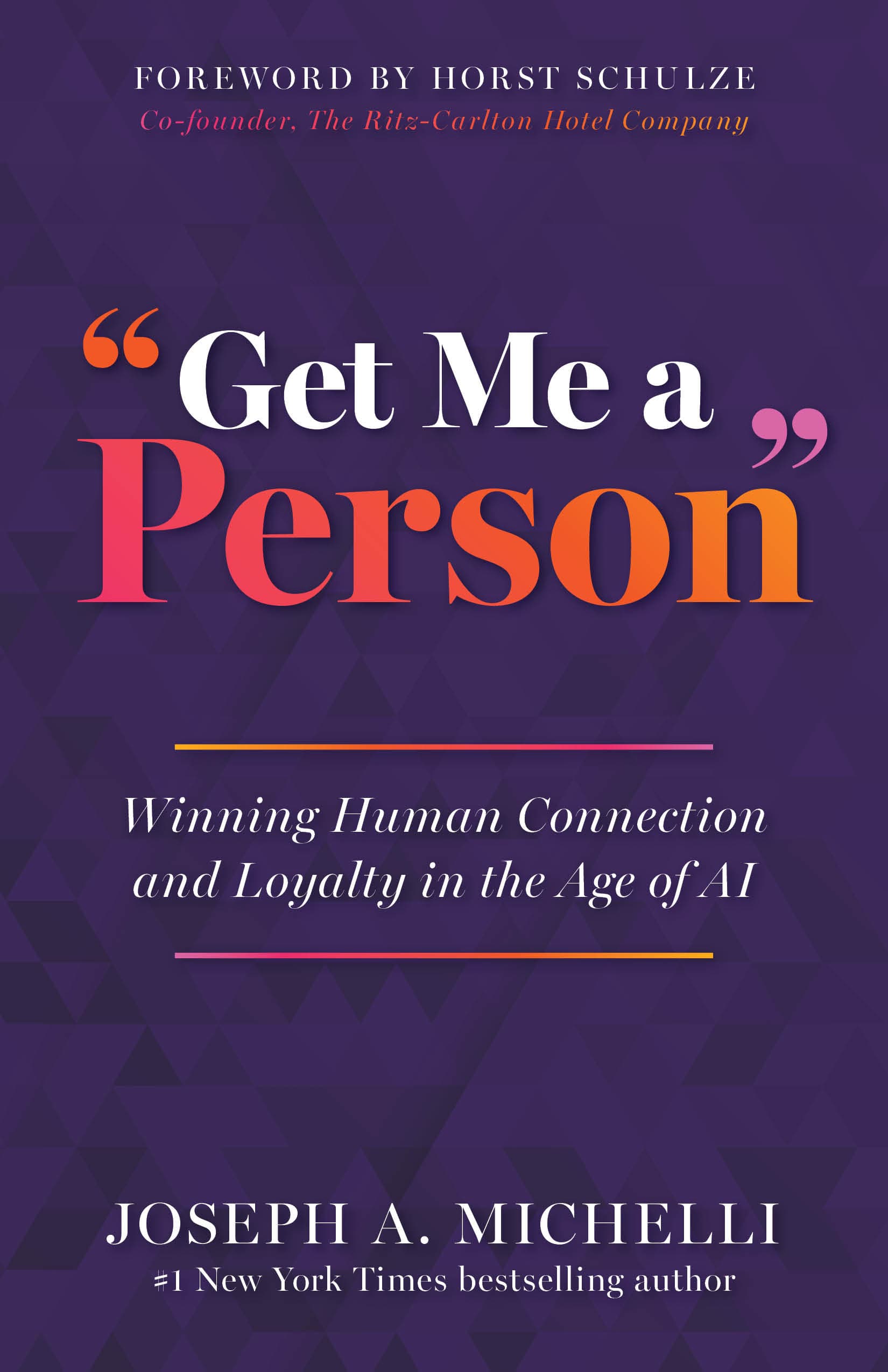
This is one of the questions at the center of my new book titled Get Me a Person: Winning Human Connection and Loyalty in the Age of AI. Order a signed, personalized copy. Free US shipping, and everyone who orders by December 31 is invited to a private session with me in January. And if your team is working out what human service is worth in your own model, let’s talk.
Sources & references
- Premium support tiers with named human contacts, phone-booking fees, relationship-manager thresholds and concierge medicine — described as widely known, long-standing industry practices. No statistics attached, and no company is named.