Give a great tool to a team that cares, and it becomes a force multiplier. Give the same tool to a team that has stopped caring, and you have just handed them a faster way to cut corners.
It’s the same software with opposite outcomes. And the difference has nothing to do with the technology.
If there is one line I would put on the wall of every leadership team racing to adopt AI right now, it is this: technology does not create your culture. It reveals it, and then it amplifies whatever it finds. If your culture is built on genuine care and pride in the work, AI will magnify that care. If your culture has drifted toward "do the minimum and don't get caught," AI will magnify that too, at machine speed.
That is a comfortable idea in the abstract. This year, the data made it concrete.
The word that named the problem: "workslop"
In September 2025, researchers from BetterUp Labs and Stanford's Social Media Lab, writing in Harvard Business Review, gave the phenomenon a name: workslop. It describes AI-generated content that looks like real work: polished, plausible, confidently formatted, but lacking the substance to move a task forward. It is the report that reads well and says nothing. The analysis that is technically complete and practically useless.
The numbers are worth pausing on. In their survey of full-time U.S. employees, 41% said they had received workslop in the previous month. Each incident took an average of nearly two hours to untangle: figuring out what was missing, redoing it, or chasing down the person who sent it. Scaled across a large organization, the researchers estimated the drag at roughly $9 million a year in lost productivity for a company of 10,000 people.
But the number that should stop a leader cold is the trust number, not the cost. In the same research, 42% of people who received workslop said they now viewed the sender as less trustworthy. Read that again. The tool did not just waste time. It quietly corroded the working relationships that hold a team together, because someone chose to pass off hollow work as real, and a colleague could tell.
That is not a technology failure. That is a culture showing itself.
Culture is the filter every tool passes through
Here is the way I have come to think about it. Every tool you introduce passes through an invisible filter on its way to becoming behavior. That filter is your culture, the sum of what people do when no one is watching. And the filter, not the tool, decides the outcome.
Run a powerful AI tool through a culture of care and pride, and it comes out the other side as better, faster, more human work. People use the machine to clear the busywork so they can spend their judgment where it matters. Run the exact same tool through a culture of disengagement and box-checking, and it comes out as workslop, hollow output shipped to hit a number with a real person left to clean it up.
The tool is identical. The culture is the variable. And this is why so many AI investments disappoint. Leaders keep upgrading the tool while ignoring what it has to pass through on the way to becoming behavior.
The $30 billion that went nowhere
If you doubt how decisive that filter is, look at the largest study of the question so far.
In 2025, MIT's Project NANDA analyzed enterprise AI adoption and reached a startling conclusion: despite tens of billions of dollars in corporate spending on generative AI, roughly 95% of organizations were seeing no measurable return. Just 5% were capturing real value.
That 95% has been argued over since, and the precision is worth keeping. The finding is that the spending never showed up in the P&L, a narrower and more uncomfortable claim than 95% of pilots failing. The researchers were direct about why. The failure was not the models. The models were capable. The failure was what they called a learning gap: the inability of companies to integrate AI into their actual workflows, structures, and cultures. That last word is theirs, not mine.
Sit with that finding next to the workslop data and a single picture emerges. The organizations getting nothing from AI are not the ones with worse software. Everyone is buying from roughly the same shelf. They are the ones whose culture could not turn a capable tool into careful work. The money bought the tool. It could not buy the caring.
Shopify made it a culture question
Watch how one company treated this as a culture problem rather than a purchasing one.
In April 2025, Shopify CEO Tobi Lütke sent a now-famous internal memo declaring that "reflexive AI usage is now a baseline expectation." Reaching for AI should become as automatic as reaching for a search engine, with teams expected to show why AI could not do a job before asking for more people. The memo drew plenty of debate, and a mandate alone can read as pressure. But the part worth studying is what came after. As later reporting on Shopify's rollout described, the real traction did not come from the decree. It came from the cultural work underneath it: leaders modeling the behavior, peers teaching peers, people given genuine permission and safety to experiment and to share what worked.
The lesson is not "send a memo." The lesson is the opposite. Even at a company willing to put AI adoption in writing as an expectation, the tool did not transform the work. The culture did. The announcement was easy. The filter is where the value was won.
Working on the filter, not just the tool
If culture is the filter, then leaders who want AI to pay off have to work on the filter directly. Three places to start.
Fix the caring before you scale the tool. If people are disengaged, a faster tool just produces faster disengagement. That is what workslop is. Gallup's 2026 research is blunt on the lever here: employees whose managers actively support them through change are dramatically more engaged than those left to figure it out alone. Presence and support upstream are what turn a tool into an asset instead of a liability.
Reward the substance, not the output. Workslop thrives wherever a culture rewards the appearance of productivity over the reality of it. If polished-looking volume gets praised and careful, harder-won work goes unnoticed, you are training people to generate slop. Recognize the substance, and you starve the slop of its oxygen.
Make it safe to say "the tool got this wrong." In a healthy culture, someone catches the machine's hollow output and fixes it. In a fearful or checked-out one, they pass it along and hope no one notices. Psychological safety is the quality-control system for everything AI touches.
Watch what people do when no one is watching. That is the truest read on your culture, and the truest predictor of what AI will become in your hands. If people cut corners unsupervised, the tool will help them cut faster. If they take pride in the work unsupervised, the tool will help them do more of what they are proud of.
Everyone has access to roughly the same models. What separates one company from the next is whether its culture turns that capability into genuine care: for the work, for each other, and for the customer on the other end of all of it. Buy a better tool without that and you will keep wondering why nothing gets better.
So here is the question worth carrying into your next leadership meeting. You are about to run a powerful new tool through your culture. Are you confident in the filter it has to pass through? Because whatever your culture already is, AI is about to give you a great deal more of it.
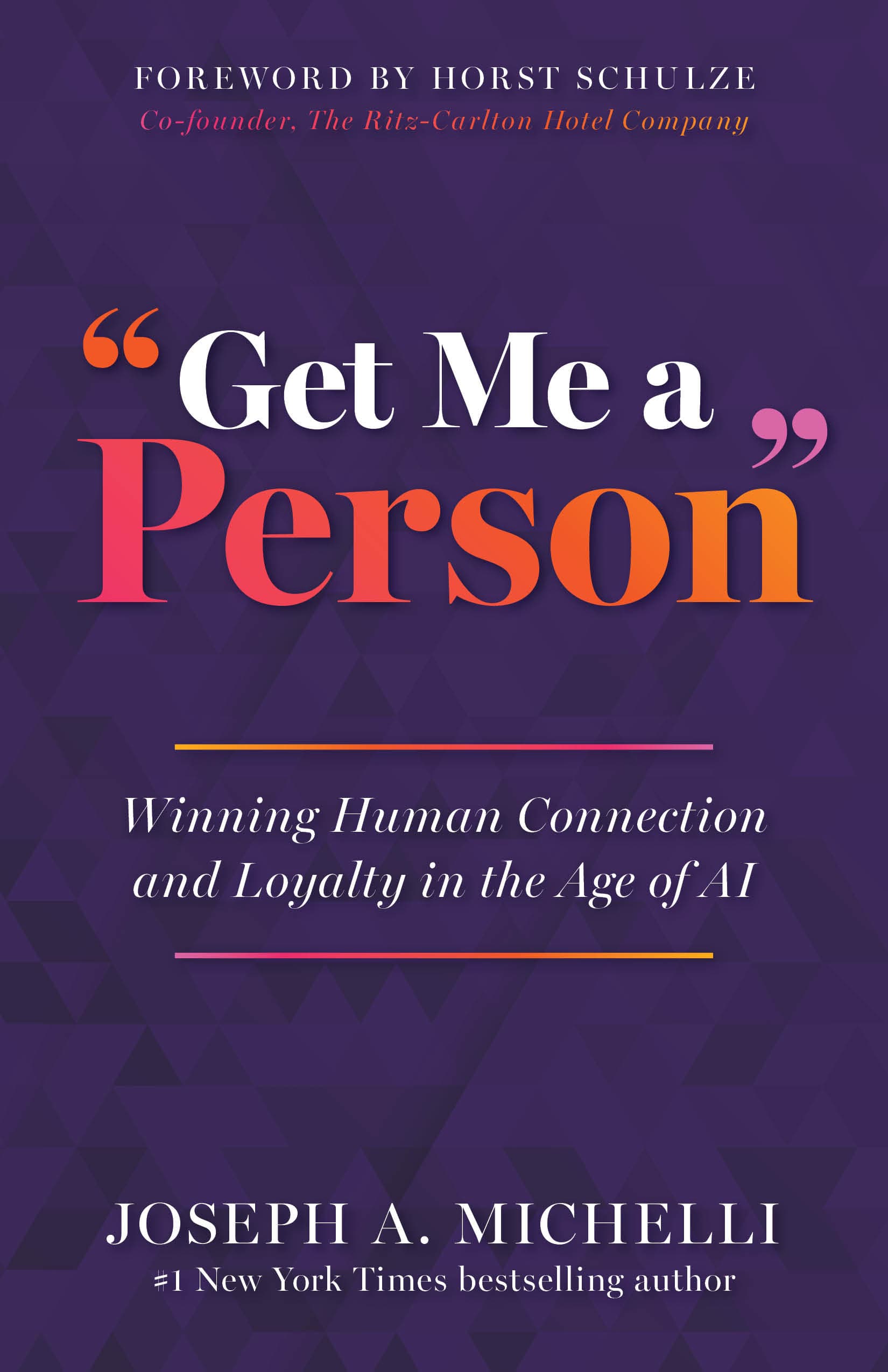
This is one of the questions at the center of my new book. Order a signed, personalized copy. Free US shipping, and everyone who orders by December 31 is invited to a private session with me in January. And if your team wants to build the kind of culture that turns tools into care, let’s talk.
Sources & references
- "Workslop": 41% received it in the past month; ~1h56m average to resolve each incident; ~$9M/year drag per 10,000 employees; 42% view the sender as less trustworthy — Niederhoffer, Rahnama, et al. (BetterUp Labs + Stanford Social Media Lab), AI-Generated "Workslop" Is Destroying Productivity, Harvard Business Review, September 2025. hbr.org; research hub: betterup.com
- ~95% of organizations see no measurable return on generative AI; failure attributed to a "learning gap" (workflow/culture integration), not model capability — MIT Media Lab, Project NANDA, The GenAI Divide: State of AI in Business 2025 (2025). Preliminary working paper, not peer-reviewed; sample of 52 interviews and 153 survey responses; Project NANDA builds agentic-AI infrastructure, which several analysts have flagged as a conflict. Widely misreported as "95% of pilots fail" — the actual finding is no measurable P&L impact, and the copy now states it that way. E.g., Fortune, finance.yahoo.com and Forbes, forbes.com
- Gallup: employees with actively supportive managers are far more engaged through change — Gallup, Employee Engagement Remains Flat as AI Adoption Accelerates (2026). gallup.com
- Shopify "reflexive AI usage is now a baseline expectation" memo (April 2025); real traction came from cultural adoption, not the mandate — Tobi Lütke memo (April 2025), reported by Digital Commerce 360, digitalcommerce360.com; cultural-adoption analysis: First Round, From Memo to Movement: Shopify's Cultural Adoption of AI, firstround.com