There is a small moment I keep hearing about from people who are otherwise perfectly comfortable with technology.
They are partway through a conversation. It is going well enough. And then something lands slightly wrong, a phrase that is a shade too smooth or an answer that arrives a beat too fast, and the thought forms: wait, am I talking to a person?
What happens in the next few seconds is worth a great deal of money to your business, and almost nobody has designed it.
The offence is the discovery, not the bot
I want to separate two things that get bundled together in most executive conversations.
Customers are, by and large, fine with automated help. They will happily let a machine track a parcel, reset a password, book a table, or answer a policy question at eleven at night. What they will not forgive is being allowed to believe they were talking to a human being and then finding out otherwise.
That second experience does something the first does not. It reaches backwards. It makes a person re-examine the whole exchange, and then the exchange before that, and then quietly wonder what else about your company is not what it appears to be. One undisclosed bot can put a question mark over an entire relationship.
So the disclosure question is not really a compliance question, though it is becoming one. It is a question about what your brand is willing to be caught doing.
The law is arriving anyway
Regulation has been moving in one direction on this for several years, and 2026 is the year it stops being theoretical.
California's Bolstering Online Transparency Act has required disclosure since 2019 when a bot is used to incentivize a sale or influence a vote. Utah's AI Policy Act, amended in 2025, requires businesses to disclose generative AI when a customer asks — and proactively in high-risk interactions involving health, finance, or legal advice. And in the European Union, the AI Act's transparency obligations took effect on August 2, 2026: any AI system that interacts directly with a person must make clear that it is an AI.
The point for a leader is simpler than the statutes. If you are going to have to tell customers eventually, you are far better off telling them now, while it still looks like a choice rather than a concession.
What disclosure actually costs, and what it buys
The fear inside most organizations is that saying so will make customers disengage. Some will. A small number will immediately ask for a person, and your containment rate will dip.
Hold that number next to what you are buying. A customer who knows they are talking to a machine calibrates their expectations to it. They ask simpler questions. They escalate earlier instead of grinding through six rounds of frustration first. They do not feel deceived when the machine reaches its limit, because it never pretended otherwise.
That is a cheaper interaction, not a more expensive one. The deception was never saving you money. It was deferring a cost onto the moment of discovery.
Three moves for the week
Say it in the first line, in plain words. Not in a footer, not in a terms page, and not in a name that hints at it. "You're chatting with our AI assistant. I can get a person any time you want one." Fourteen words that cost you nothing and prevent the one experience you cannot recover from.
Name your bot like a bot. Giving an automated system a warm human first name is a decision to blur the line, and customers read it exactly that way once they work it out. If you would be uncomfortable explaining the naming choice to a journalist, that is your answer.
Make the exit visible from the first screen. Disclosure without an off-ramp is just a warning. The sentence that earns trust is the one that says a person is available, and then proves it when someone takes you up on it.
There is an advantage sitting in this, and it will not last long. Right now, saying plainly that a customer is talking to a machine still reads as unusual candour. In three years it will read as the legal minimum. The companies that say it early get credit for character. The ones who wait get credit for compliance.
So here is the question worth carrying into your next operating review. If a customer of yours asked, mid-conversation, whether they were talking to a human being, what would your system say? And how would they feel about the answer an hour later?
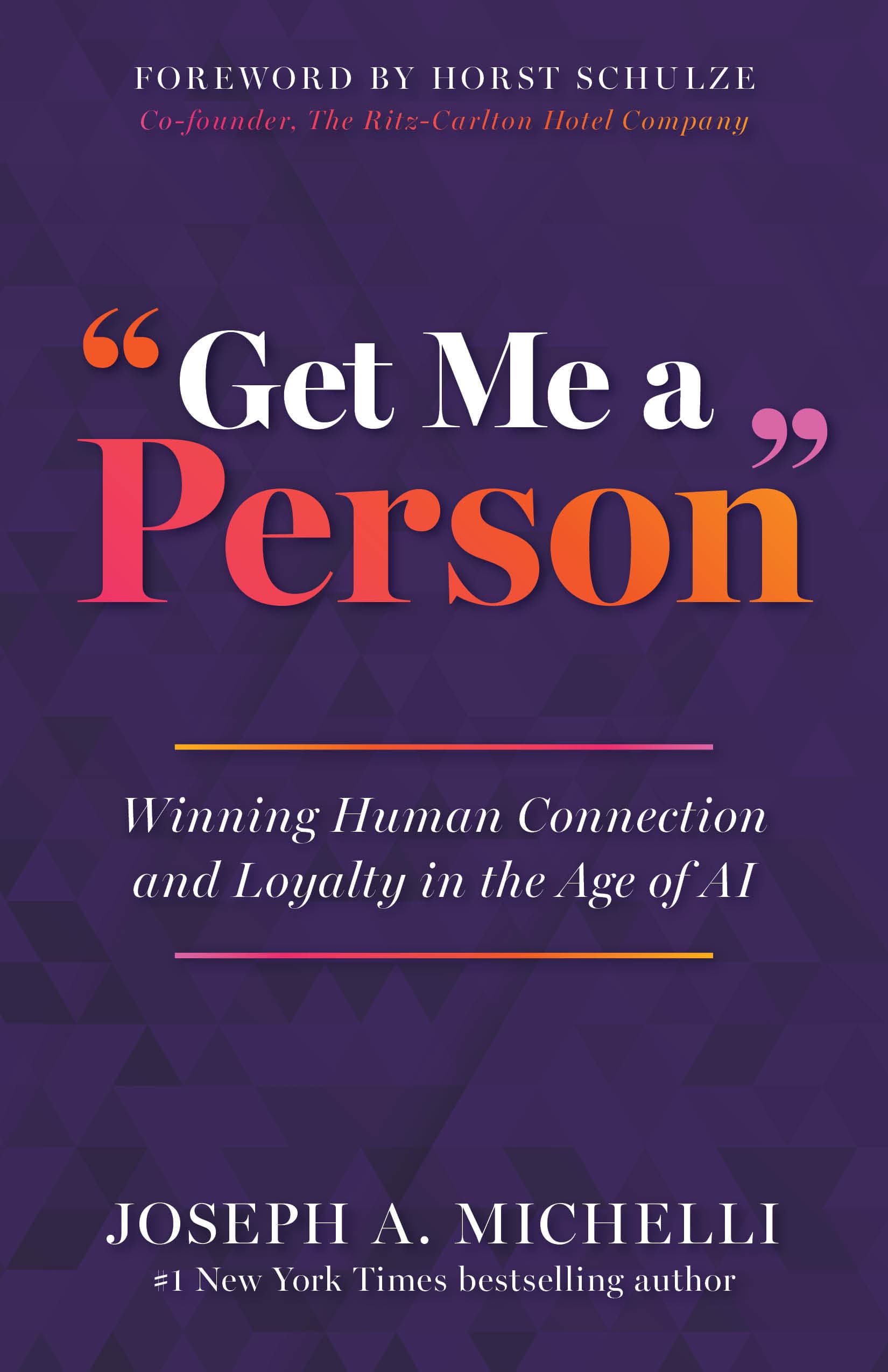
This is one of the questions at the center of my new book. Order a signed, personalized copy. Free US shipping, and everyone who orders by December 31 is invited to a private session with me in January. Also, if your team is working out where to draw the disclosure line in your own experience, let’s talk.
Sources & references
- California B.O.T. Act (SB 1001), Business and Professions Code §§17940–17943, in force July 1, 2019 — bot disclosure where used to incentivize a sale or influence a vote. leginfo.legislature.ca.gov
- Utah Artificial Intelligence Policy Act (SB 149, 2024), amended by SB 226 effective May 7, 2025 — generative AI disclosure on request, and proactively in high-risk interactions. Repeal date extended to July 2027. SB 149: le.utah.gov; SB 226: le.utah.gov
- EU AI Act, Article 50 transparency obligations for AI systems interacting with natural persons — applicable from August 2, 2026. ai-act-service-desk.ec.europa.eu
- No survey statistics are used in this post. The argument rests on the structure of the disclosure problem and on law, both of which are checkable.